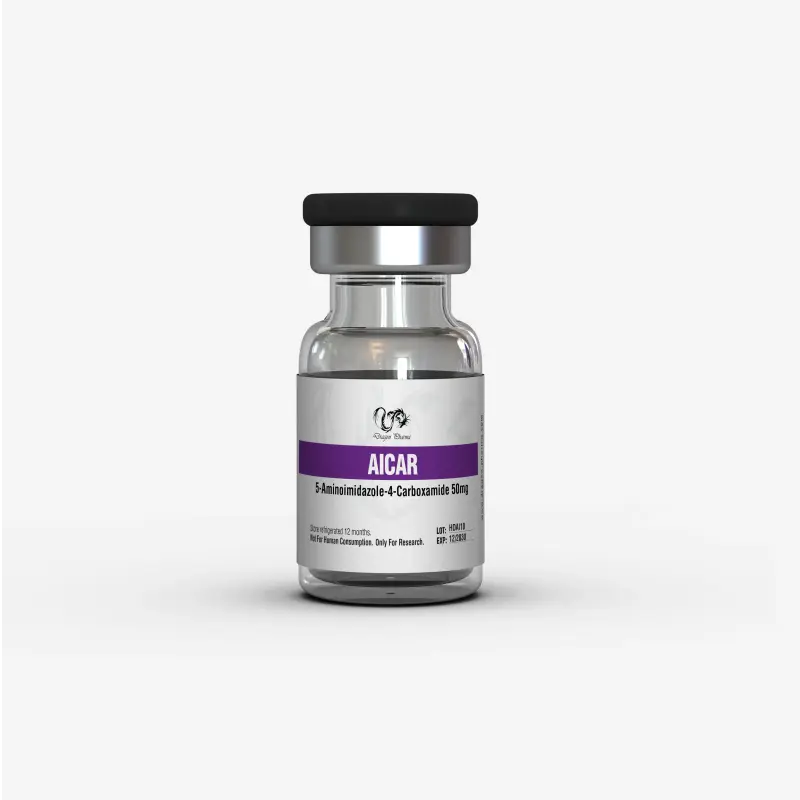
AICAR 50mg
- Pack Size: vial
- Concentration: 50mg
- International
- U.S. Domestic
- USA MADE 2-7 days delivery
- International 5-20 days delivery
for: Endurance Boost & Energy Metabolism.
AICAR (5-Aminoimidazole-4-carboxamide Ribonucleoside) is a specialized research reagent utilized primarily to investigate cellular energy-sensing and metabolic signaling networks. As a cell-permeable analog of adenosine monophosphate (AMP), it is a potent activator of AMP-activated protein kinase (AMPK). Dragon Pharma provides AICAR 50mg at a purity level of 99%+, specifically for use in in-vitro laboratory experiments and preclinical animal models.
Overview
In the realm of metabolic research and cellular energetics, few compounds offer as much utility as AICAR (5-Aminoimidazole-4-carboxamide Ribonucleoside). Known scientifically as Acadesine, this compound is a cell-permeable analog of adenosine monophosphate (AMP) that has become a fundamental tool for investigators exploring the "metabolic master switch" of the cell. Dragon Pharma provides AICAR 50mg at a minimum purity of 99%, ensuring that researchers have access to a high-grade Research Peptide capable of producing reproducible and accurate data in complex biological models.
As scientific inquiry into metabolic disorders, oncology, and cardiovascular resilience expands, the need for reliable AMPK activators like AICAR has grown. This expanded profile examines the biochemical characteristics, structural integrity, and multifaceted research applications of AICAR 50mg.
Molecular Characteristics and Chemical Profile
- Chemical Identity: 5-Aminoimidazole-4-carboxamide ribonucleoside
- Molecular Formula: C9H15N4O8P
- Molecular Weight: 258.23 g/mol
- Purity: >99% (HPLC and Mass Spectrometry verified)
- Form: Lyophilized powder
- Manufacturer: Dragon Pharma
- Concentration: 50 mg
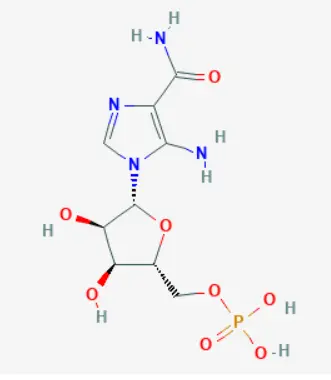
Source: PubChem
The structural integrity of AICAR is what allows it to be taken up by cells via adenosine transporters. Once inside the intracellular environment, it is phosphorylated by adenosine kinase into ZMP. ZMP is the active metabolite that mimics the action of AMP, binding to the $\gamma$-subunit of the AMP-activated protein kinase (AMPK) complex.
Research Applications
The peptide is utilized in various scientific investigative domains, including:
- Metabolic Signaling: Mapping pathways and profiling phosphorylation states.
- Glucose Transport: Investigating insulin-stimulated uptake and GLUT-4 trafficking in muscle models.
- Inflammation: Studying AMPK-linked modulation of macrophage signaling and cytokine outputs.
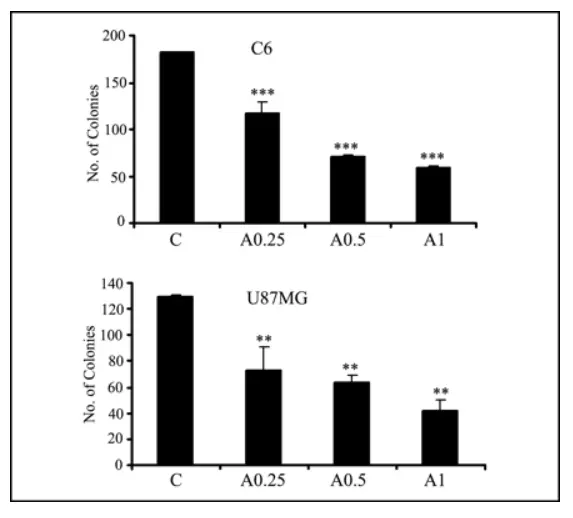
- Cell-Cycle & Apoptosis: Assessing AMPK-associated checkpoints and caspase-linked pathways in cancer research (e.g., glioma and prostate cells).
- Vascular Biology: Evaluating smooth muscle proliferation and leukocyte adhesion mechanisms.
- Reproductive Biology: Researching AMPK-linked regulation of spermatozoa energy metabolism and motility.
Pathway and Mechanistic Context
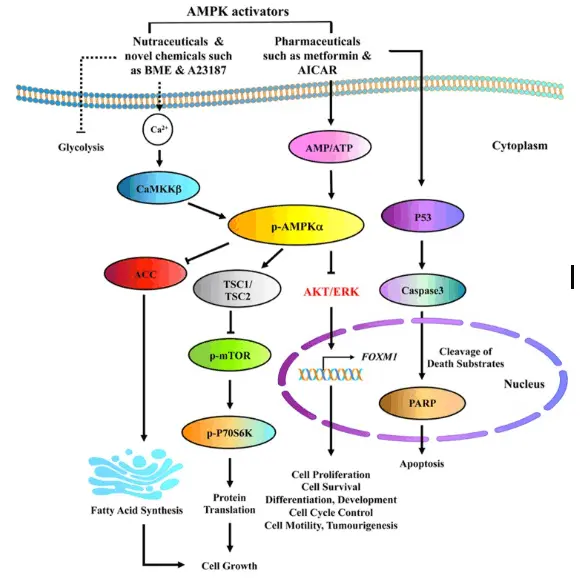
The core value of AICAR 50mg in a laboratory setting is its ability to manipulate the AMPK pathway without changing the actual ATP:ADP ratio of the cell. In a natural physiological state, AMPK is activated when the cell runs low on energy (ATP) and the levels of AMP rise. AICAR bypasses this requirement by introducing a chemical analog (ZMP) that "tricks" the energy sensors.
The AMPK-PGC-1α Signaling Axis
Upon activation by AICAR, AMPK initiates a global shift in cellular behavior. It promotes energy-producing catabolic pathways while simultaneously inhibiting energy-consuming anabolic pathways. One of the most significant downstream effects of this activation is the upregulation of PGC-1α, a master regulator of mitochondrial biogenesis.
Key Mechanistic Shifts:
- Glucose Transport: AMPK activation leads to the translocation of GLUT-4 transporters to the cell membrane, facilitating insulin-independent glucose uptake.
- Lipid Metabolism: It inhibits the enzyme acetyl-CoA carboxylase (ACC), thereby reducing fatty acid synthesis and promoting fatty acid oxidation (the "burning" of fat).
- Protein Synthesis Control: By inhibiting the mTOR pathway, AMPK conserves energy during perceived stress by slowing down protein production.
Primary Research Applications
Researchers utilize AICAR across a broad spectrum of scientific disciplines. Its ability to mimic the effects of exercise and caloric restriction makes it a versatile tool for studying chronic diseases and aging.
- Metabolic Syndrome and Diabetes Research
AICAR is heavily utilized in studies involving insulin resistance and Type 2 Diabetes. Because it stimulates glucose uptake in skeletal muscle models independently of the insulin signaling pathway, it provides a unique framework for investigating how to restore glucose homeostasis in insulin-insensitive tissues.
- Exercise Mimicry and Skeletal Muscle Adaptation
Known in research circles as an "exercise mimetic," AICAR is used to observe how tissues adapt to perceived physical strain. Investigators study changes in muscle fiber type (shifting from fast-twitch to slow-twitch oxidative fibers) and the increase in mitochondrial density. For labs focused on physical performance and resilience, sourcing high-quality Peptides for Sale like AICAR allows for the exploration of how chemical signaling can replicate the benefits of endurance training.
- Oncology and Growth Regulation
In cancer research, AICAR is studied for its "anti-proliferative" effects. By activating AMPK, AICAR can induce cell-cycle arrest in various cancer cell lines. Research models focusing on glioma, prostate, and breast cancer cells examine how AICAR engages p38 MAPK signaling and increases the accumulation of p21, a protein that halts the cell cycle.
- Cardiovascular and Ischemic Preconditioning
AICAR is investigated for its potential to protect tissues from ischemia (lack of oxygen). In cardiac research models, the compound is used to study "ischemic preconditioning," where activating the energy sensors before an oxygen-deprived event may help the heart survive and recover more effectively by maintaining cellular ATP levels.
Form and Analytical Testing
At Dragon Pharma, the commitment to scientific accuracy begins with the manufacturing process. AICAR 50mg is produced under strict laboratory conditions to ensure that the compound remains stable and potent.
Lyophilization for Stability
The compound is supplied in a lyophilized (freeze-dried) form. This process removes moisture while preserving the molecular structure, which is critical for maintaining a long shelf life. Lyophilized peptides are significantly more resistant to temperature fluctuations during transit, ensuring that they arrive at your facility in optimal condition.
Rigorous Analytical Verification
To guarantee a purity level of 99% or higher, every batch undergoes two primary tests:
- High-Performance Liquid Chromatography (HPLC): This test separates the components of the sample to ensure that the active AICAR molecule is present in the specified concentration without synthesis byproducts.
- Mass Spectrometry (MS): This confirms the exact molecular weight of the compound, verifying that the chemical signature matches the intended Acadesine profile.
Preclinical Research Summary
Recent preclinical data highlights the expanding utility of AICAR. In mouse models of obesity, researchers have used AICAR to evaluate adipose inflammatory signaling, observing a reduction in pro-inflammatory cytokines when the AMPK pathway is sustained. Additional rat skeletal muscle models have used AICAR to compare chemical signaling to actual treadmill exercise, mapping out the overlap in gene expression between the two stimuli.
Furthermore, in vascular biology research, AICAR has been used to assess smooth muscle proliferation. By activating AMPK, researchers were able to observe a significant reduction in the cell-cycle progression of vascular cells, which is a key area of interest in atherosclerosis research.
Source: Journal of Biological Chemistry
Source: PubMed
Product Usage Disclaimer: This product is intended for laboratory and in-vitro research use only. It is not approved for human or veterinary application. Must be handled by qualified professionals. Not for drug, food, or cosmetic purposes. Misuse or misbranding is strictly prohibited.
Storage, Handling, and Reconstitution
For the best results in your research, proper handling of Dragon Pharma AICAR is essential:
- Storage: Lyophilized vials should be stored at -20°C for long-term stability.
- Reconstitution: Use sterile, bacteriostatic water or saline. Gentle agitation (swirling) is recommended; avoid vigorous shaking to prevent denaturing the compound.
Shelf Life: Once reconstituted, the solution should be refrigerated at 2°C to 8°C and utilized within 7 to 14 days to ensure maximum potency.
-40% OFF
BPC 157 5mg
-40% OFF
CJC-1295 DAC 5mg
-40% OFF
IGF-1 LR3 1mg
-40% OFF
IPAMORELIN 5mg
-40% OFF
MOTS-c 10mg
-40% OFF
TB 500 10mg
Insights
The Synergy of Performance: Optimizing Liver Health, Fat Loss, and ATP Production with High-Purity Peptides
Aesthetic & Athletic: Using Weight Loss Peptides for Body Restoration

SARMs vs Peptides: What Works Best for Your Fitness Goals?
CJC‑1295 & Ipamorelin: Exploring Their Potential Synergy in Anabolic Signaling

99% Purity
Ensuring the highest standard with 99% purity.

Quality Ingredients
Crafted with purity and quality ingredients at the core.

Fast Shipping
Fast, reliable shipping straight to your door.

No TFA or Fillers
Nothing extra, just science: no TFA, no fillers.
Peptide Quality You Can’t Find Elsewhere!
| Dragon Peptides | Leading Competitor | |
|---|---|---|
| 200+ Peptide Variants |  |
 |
| USA-Manufactured Research Grade | |
|
| WHO/GMP & ISO 9001:2015 Certified | |
|
| Third-Party Tested for Purity | |
|
| Certificates of Analysis Provided | |
|
| Competitive Pricing Without Compromise | |
|
| Secure & Discreet Shipping | |
|

Quality You Can Rely On — Guaranteed
At PeptideHubs, scientific integrity and product reliability are at the core of everything we do. Each compound is manufactured and tested under strict quality control protocols to ensure consistency, purity, and performance for research applications.
However, if for any reason our product does not meet your research expectations, we offer a 60-day money-back guarantee — providing a risk-free procurement experience for qualified researchers and institutions.
Your research deserves uncompromised quality — and we stand behind every order to ensure you receive.